Last updated: July 14, 2026
Is Colour Analysis Actually Legit, or Just a TikTok Trend?
Quick answer: The underlying science — that certain colours complement a person's undertone and contrast level better than others — is real and predates TikTok by decades, rooted in colour theory used by professional stylists and designers since the 1980s. What's newer (and more mixed in quality) is the wave of TikTok filters and quick-and-dirty online quizzes claiming to diagnose your season instantly.
Where Colour Analysis Actually Comes From
The core idea — undertone, depth, and contrast determine which colours flatter a person — was formalised in professional colour consulting in the 1980s (the original "seasonal colour analysis" movement), long before social media. It draws on genuine principles of colour theory and contrast, the same fundamentals used in art, design, and photography.
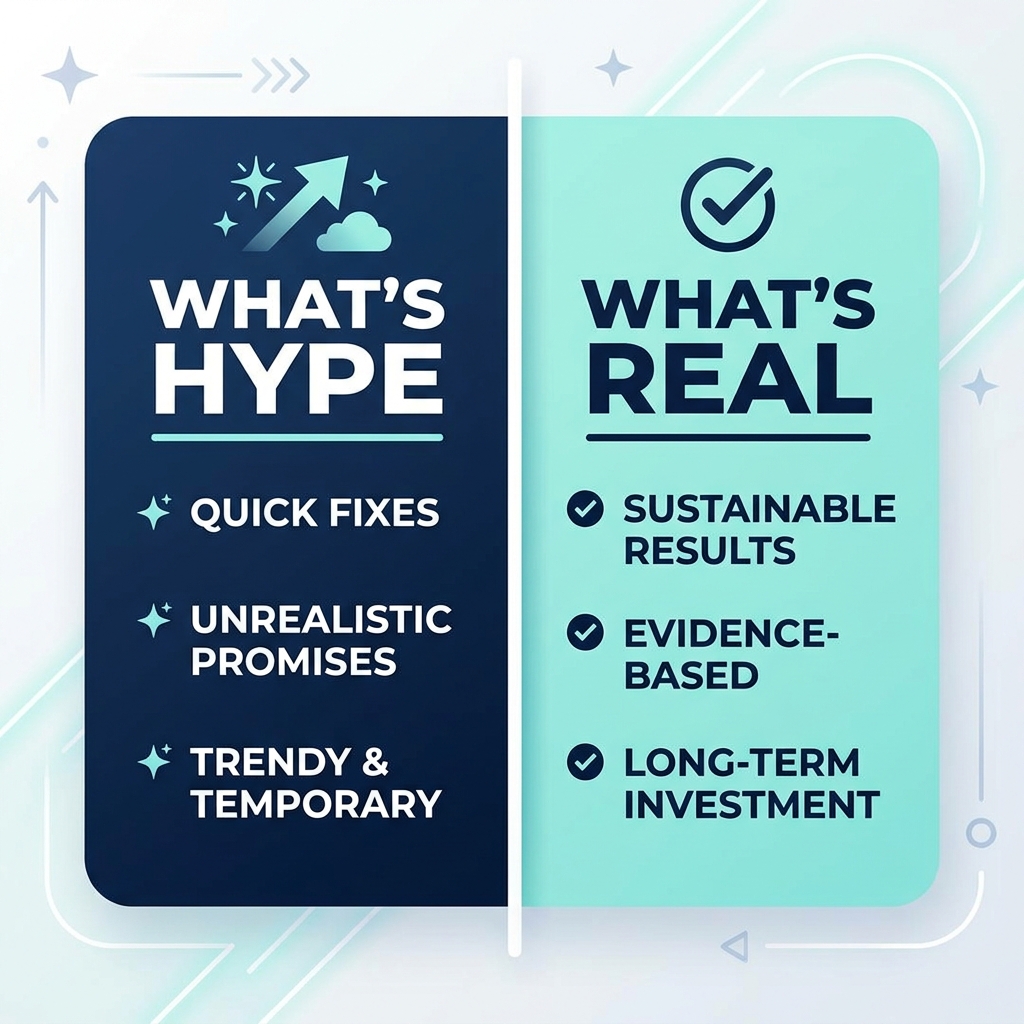
What's Real
- Undertone genuinely affects how a colour reads against skin — this is basic colour contrast, not pseudoscience
- Professional colour consultants have used structured draping methods for decades with consistent, repeatable results
- The "does this colour make me look tired or bright" effect is measurable — it comes down to contrast and light reflection near the face
What's More Hype Than Science
- Some TikTok filters apply a colour overlay to your face and call it a "season" — filters can shift under different lighting and camera settings, making results inconsistent
- A handful of online quizzes reduce the analysis to a few multiple-choice questions with no visual component at all, which skips the actual colour comparison step entirely
- Treating your season as a rigid rulebook rather than a helpful starting guide — real colour analysis allows for personal exceptions
How to Get an Accurate Read
Whether you use a professional consultant or an AI tool, accuracy depends on consistent, neutral lighting (natural daylight, no filters or heavy camera processing) and comparing your face against actual colour swatches — not just answering questions about your hair or eye colour in isolation.
FAQ
Do professional colourists all agree on one system?
Not exactly — there are a few competing frameworks (4-season, 12-season, and others), but they broadly agree on the same underlying undertone and contrast principles, just organised differently.
Can bad lighting fool a colour analysis?
Yes — this is the single biggest source of inaccurate results, whether from a filter, a photo, or even an in-person session under artificial lighting.
Is AI-based colour analysis as accurate as a professional session?
A well-built AI tool that analyses your actual face in good lighting can be highly accurate and has the advantage of consistency — it applies the same standard every time, without the added cost of a professional session.
Skip the filters — [get a proper AI-based reading with Colourity →](https://colourity.com)