Last updated: July 17, 2026
Best Outfit Colours for Men With Indian Skin Tones (Fair, Wheatish & Dusky)
Quick answer: The colour that makes you look sharp depends on two things — your skin depth (fair/wheatish/dusky) and your undertone (warm or cool). Navy, olive, and maroon are near-universally flattering for Indian men. Mustard, rust, and earthy tones elevate warm Indian skin; jewel blues and deep plum light up cool Indian skin.
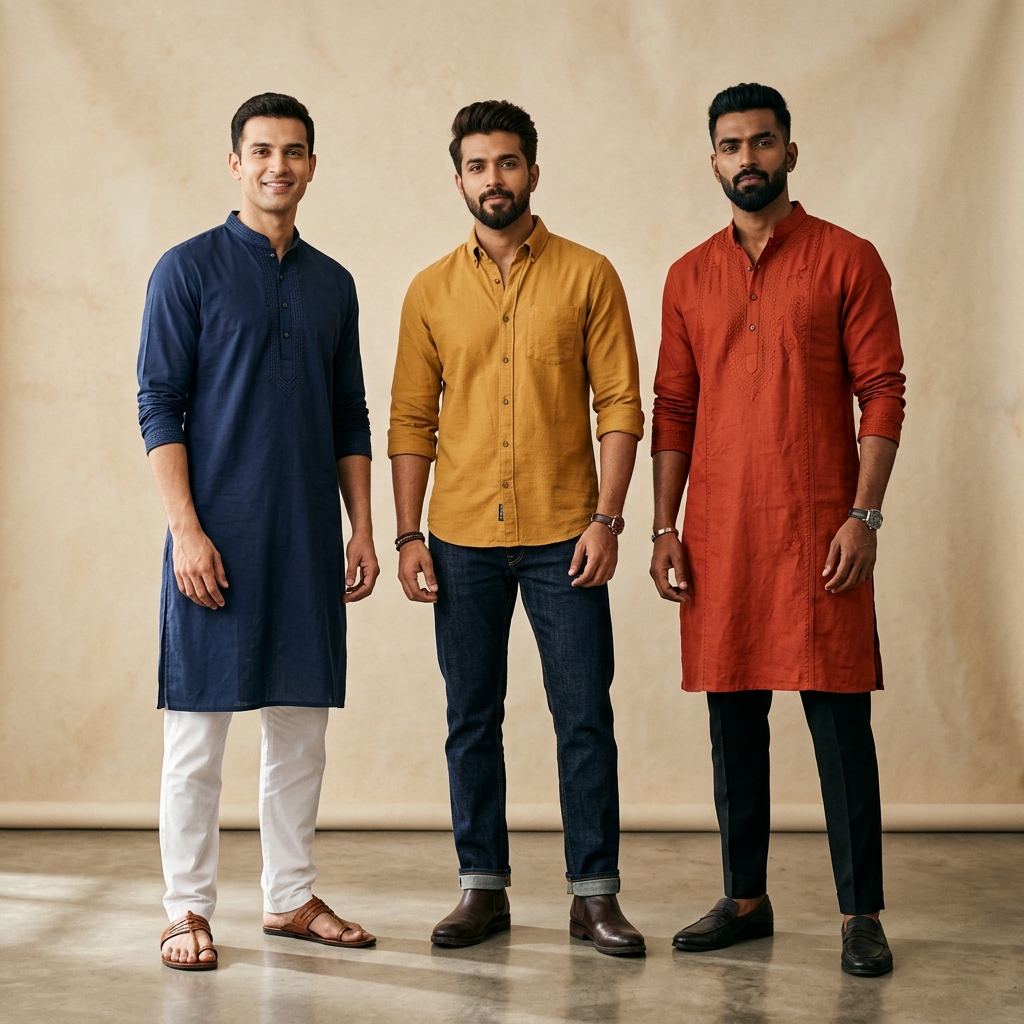
Why Indian Men's Colour Advice Is So Bad
Search "outfit colour for Indian men" and you'll find either:
- Generic Western guides that assume pale skin is the baseline
- Reddit threads with 20 different opinions and no system behind them
What's missing is a simple, science-backed framework applied specifically to Indian men's skin tones and garment types — from everyday t-shirts to formal kurtas.
This guide fills that gap.
Step 1: Know Your Skin Profile
Skin Depth
- Fair — Light skin; may burn in sun; often with pink, peach, or golden undertones
- Wheatish / Medium — India's most common skin tone; golden, olive, or warm-neutral cast
- Dusky / Deep — Richer, deeper complexion; brown, warm-brown, or cool-neutral undertones
Undertone
- Warm — Greenish veins on inner wrist; gold watch looks better than silver; skin has a golden/olive quality
- Cool — Blue or purple veins; silver watch looks better; skin has a pink or ash quality
- Neutral — Can't distinguish clearly; both metals work equally
Casual Wear: T-Shirts and Everyday Clothes
Fair Skin — Warm Undertones
| Colour | Best Choice | Notes |
|---|---|---|
| Blues | Cobalt, royal blue | Avoid pale powder blue |
| Greens | Olive, warm sage | Your best-performing neutral |
| Reds | Warm red, coral | Avoid icy cool reds |
| Neutrals | Cream, warm white | Ivory over stark white |
| Yellows | Pale gold, soft yellow | Warm base only |
Your signature look: Olive green t-shirt + cream or khaki chinos. Instantly put-together, perfectly suited to warm fair Indian skin.
Fair Skin — Cool Undertones
| Colour | Best Choice | Notes |
|---|---|---|
| Blues | Navy, sapphire, periwinkle | Any blue works well |
| Purples | Lavender to deep plum | Exceptional for cool fair skin |
| Pinks | Dusty rose, berry | Often underrated for men — try it |
| Greens | Teal, emerald | Cool greens over earthy greens |
| Neutrals | Crisp white, light grey | White is a strong choice here |
Your signature look: Navy t-shirt + dark grey slim trousers. Classic, clean, and perfectly matched to cool fair undertones.
Wheatish Skin — Warm Undertones
This is the majority of Indian men — and warm wheatish skin has the widest colour range of any profile. Most jewel tones work, and earthy tones are your superpower.
| Colour | Best Choice | Notes |
|---|---|---|
| Blues | Navy, indigo, cobalt | All work; cobalt is exceptional |
| Greens | Olive, forest green, army | These are your best neutrals |
| Oranges | Rust, burnt orange, terracotta | Your signature — no other skin tone owns this as well |
| Yellows | Mustard, deep amber | The most flattering yellow for warm Indian skin |
| Reds | Maroon, wine, warm red | Maroon is a reliable go-to |
| Neutrals | Camel, tan, warm white | Earthy neutrals are excellent |
Your signature look: Rust or burnt orange t-shirt + dark navy jeans. This combination is iconic on warm wheatish Indian skin.
Wheatish Skin — Cool Undertones
| Colour | Best Choice | Notes |
|---|---|---|
| Blues | Royal blue, steel blue | Strong performers |
| Greens | Teal, emerald, jade | Cool greens are excellent |
| Purples | Plum, deep orchid | Underused but stunning |
| Pinks | Dusty pink, mauve | Try once — you'll be surprised |
| Neutrals | Charcoal, light grey, white | Cooler neutrals suit you well |
Your signature look: Steel blue or teal t-shirt + charcoal grey trousers. Versatile, modern, and perfectly calibrated.
Dusky / Deep Skin Tones
The single most important principle for deep Indian skin: saturation. Muted, washed-out colours disappear. Saturated, rich, bold colours sing.
| Colour | Best Choice | Notes |
|---|---|---|
| Blues | Electric blue, cobalt, navy | All work; electric blue is spectacular |
| Greens | Emerald, bright green | Avoid dull olive — go jewel tones |
| Yellows | Saffron, marigold, gold | Rich warm yellows are exceptional |
| Reds | Scarlet, crimson, deep red | High saturation — no washed reds |
| Whites | Pure crisp white | Maximum contrast — powerful look |
| Purples | Bright violet, deep plum | Stunning |
| Oranges | Saffron, deep terracotta | Bold warm tones are natural fits |
Your signature look: Crisp white t-shirt + dark navy trousers. The contrast between pure white and deep skin is one of the most visually striking combinations in menswear.
Formal / Office Wear: Shirts and Dress Clothes
The Shirt Colour Guide
| Skin Tone | Shirts That Work | Shirts to Avoid |
|---|---|---|
| Fair (warm) | Warm white, peach, soft coral, olive | Icy blue, grey |
| Fair (cool) | Crisp white, light blue, lavender | Warm beige, mustard |
| Wheatish (warm) | Ivory, cobalt blue, forest green, warm rust | Cool grey, icy pastels |
| Wheatish (cool) | White, steel blue, teal, mauve | Warm ochres |
| Dusky | White, rich cobalt, emerald, electric blue | Pale or muted shades |
Universal formal principle: The cleaner and bolder the shirt, the sharper the look. For formal settings, a single bold colour shirt (no print) in a shade matched to your undertone is always the right choice.
Ethnic Wear: Kurtas, Indo-Western, and Formal Indian
Kurta Colours by Skin Tone
Kurtas operate differently from casual wear — the fabric (cotton, silk, linen, or Nehru-collar options) interacts with colour in visible ways.
| Skin Tone | Best Kurta Colours | Notes |
|---|---|---|
| Fair (warm) | Off-white, warm beige, peach kurta, gold thread | Avoid overly cool or stark whites |
| Fair (cool) | White, navy, cobalt, plum | High contrast with dark thread works well |
| Wheatish (warm) | Maroon, deep mustard, forest green, warm teal | The classic "looks great in everything" profile |
| Wheatish (cool) | Royal blue, emerald, deep plum, slate | Jewel tones are your sweet spot |
| Dusky | White, electric blue, gold, saffron, crimson | Saturation is key — rich colours only |
Kurta colour note: For formal events (weddings, family functions), choose one bold colour and let the embroidery or thread work provide the contrast. Avoid too many colours in one kurta — clean and rich beats busy.
Trouser / Pyjama Pairing for Kurtas
| Kurta Colour | Best Bottom Colour |
|---|---|
| White / Ivory kurta | Navy, dark grey, or matching white |
| Navy / Blue kurta | White, ivory, or cream |
| Maroon / Wine kurta | Ivory, black, or dark grey |
| Mustard / Yellow kurta | White, dark olive, or brown |
| Emerald / Green kurta | Ivory, cream, or black |
| Rust / Orange kurta | Ivory, camel, or dark brown |
Rule: The bottom should anchor the look. Choose a neutral or deep tone for the pyjama/trouser, and let the kurta carry the colour statement.
The 5 Most Wearable Colours for Indian Men (Works for Most Skin Tones)
If you want colours that perform across almost all Indian skin tones, this is your starter list:
1. Navy Blue — Flattering on fair, wheatish, and dusky skin across warm and cool undertones
2. Olive Green — Earthy warmth that complements most Indian skin's natural undertones
3. Maroon / Burgundy — Warm depth that looks rich and intentional on all depths
4. Off-White / Ivory — A warmer alternative to stark white that works across skin tones
5. Forest Green — Deep, earthy green that reads as sophisticated without being showy
Colours Indian Men Should Approach Carefully
These aren't "never wear" — they're shades that require more care to execute:
| Colour | The Challenge | Fix |
|---|---|---|
| Neon shades | Overpowers most Indian skin tones | Choose the rich, saturated version instead |
| Pale pastels | Often too soft for most Indian skin's contrast level | Go one shade deeper |
| Beige / Tan | Can blend into warm skin tones, looking washed out | Pair with a bold contrast piece |
| All-grey outfit | Looks flat without intentional contrast | Add a white or navy accent piece |
| Very pale yellow | Reads as washed out against warm and deep skin | Choose mustard or gold instead |
Frequently Asked Questions
Q: What's the best colour for a first impression — job interview, date, etc.?
Navy blue. It signals trustworthiness, competence, and style across all contexts. Works for shirts, kurtas, and casual settings.
Q: I have very dark skin and feel limited to a few safe colours. Is that true?
Completely false. Deep Indian skin has the widest range of effective bold colours. Navy, cobalt, white, saffron, emerald, and gold all look exceptional. The only adjustment is avoiding muted or washed-out shades — go saturated, not pale.
Q: Can Indian men wear pink?
Yes. Dusty rose, blush, and mauve are increasingly common in Indian menswear. For fair cool skin, soft pink kurtas are genuinely flattering. For wheatish and dusky skin, a dusty rose shirt styled confidently looks sharp.
Q: What about prints and patterns — does skin tone matter?
Skin tone matters less for prints. The key factors are print scale (small prints for shorter/leaner frames, larger prints for taller/broader frames) and colour within the print (still applies the same rules above).
Q: How do I quickly test if a colour works for me in a shop?
Hold the folded fabric directly under your chin in natural light (step towards a window or outdoors). Look at your face — not the fabric. If your skin looks more alive, healthy, and clear, the colour works. If you look tired or your features look flat, move on.
Know Your Exact Colours
Skin tone categories are a starting point, but your exact undertone and colour season determine your most flattering palette precisely. The [Colourity app](https://colourity.com) analyses your face and generates a personalised colour palette — so you shop with confidence, not guesswork.