Last updated: July 14, 2026
Why Do Some Colours Make You Look Tired? The Science of Colour and Skin
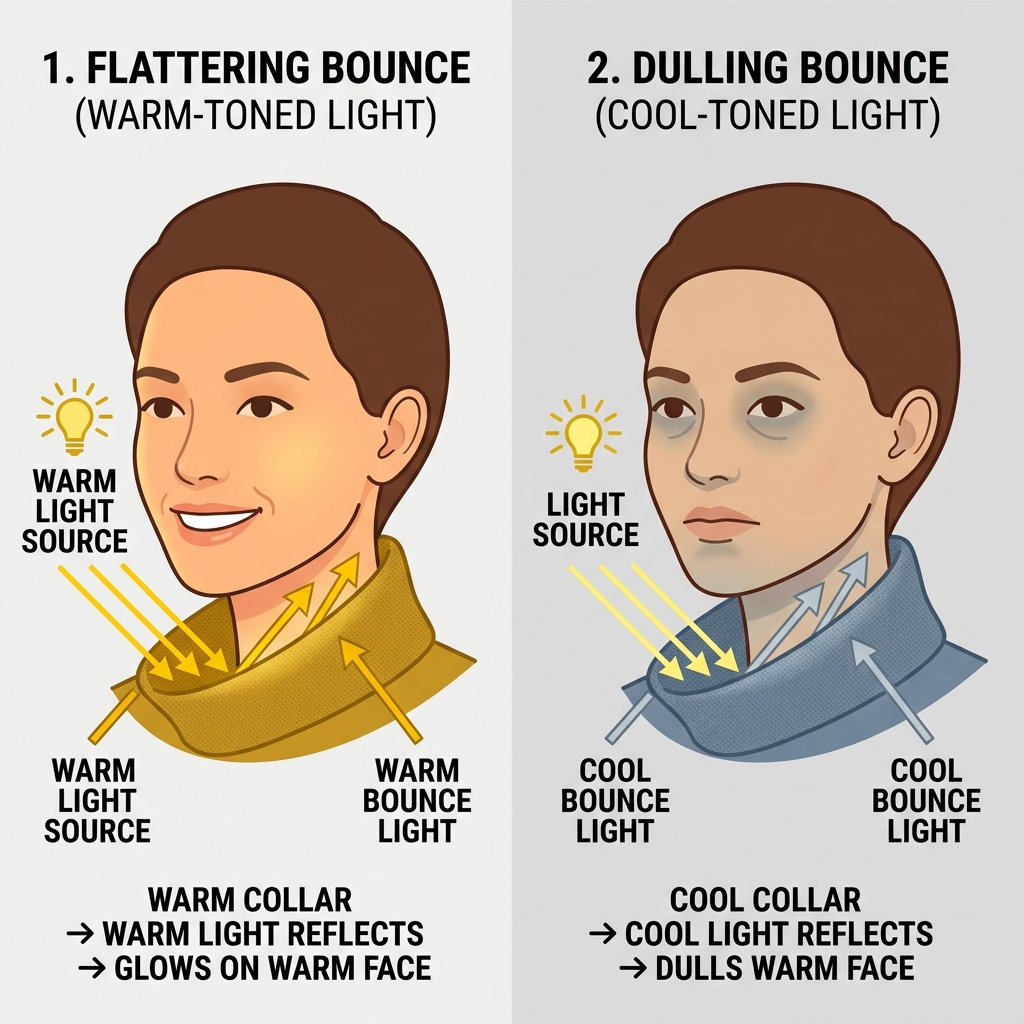
Quick answer: Colours worn close to your face reflect their own light back onto your skin. When a colour's undertone clashes with your own, that reflected light exaggerates shadows and dullness — especially under the eyes and along the jaw — which reads as tiredness even if you're well-rested.
The Actual Mechanism
Skin isn't a flat, opaque surface — it partially reflects nearby colours, especially in the delicate skin near the eyes and jaw. When the colour close to your face shares your undertone, that reflection reads as a healthy glow. When it clashes, the same reflection reads as sallowness, greyness, or shadow — your skin's undertone and the fabric's undertone are essentially fighting for the same light.
Contrast and Value Also Matter
It's not only about warm versus cool — how light or dark a colour is relative to your own depth matters too. A colour too far from your natural depth (very pale on very deep skin, or very dark on very fair skin) can create harsh contrast that draws attention to shadows rather than your features.
Common Colours That Cause This — and Why
- Cool undertones wearing warm mustard or orange close to the face: the warm reflection can read as a yellowish, tired cast rather than a glow
- Warm undertones wearing icy, blue-based pastels: the cool reflection can drain warmth from the skin, reading as pale or washed out
- Anyone wearing a colour far outside their natural depth: too pale or too dark relative to your skin creates contrast that emphasises shadows rather than your face
The Quick Fix Test
Hold two different tops up to your face in daylight, one at a time, and watch your under-eye area specifically. The colour that keeps that area looking smooth and rested — rather than shadowed — is doing its job; the one that doesn't is fighting your undertone, not your sleep schedule.
FAQ
Does lighting matter more than the colour itself?
Lighting affects how visible the effect is, but the underlying clash is about the colour's relationship to your undertone — bad lighting can hide a good match or a bad one equally, so daylight is the fairest test.
Can makeup fix a bad colour choice?
Partially — warming up blush or lip colour can offset a cool-clashing top on a warm complexion, and vice versa, but it's compensating for the mismatch rather than removing it entirely.
Does this "tired" effect happen the same way for every skin tone?
The mechanism is the same for everyone, but which specific colours trigger it depends entirely on your individual undertone and depth — there's no universal "tiring" colour, only tiring combinations for your particular skin.
Stop guessing which colours are working against you — [check your palette with Colourity →](https://colourity.com)