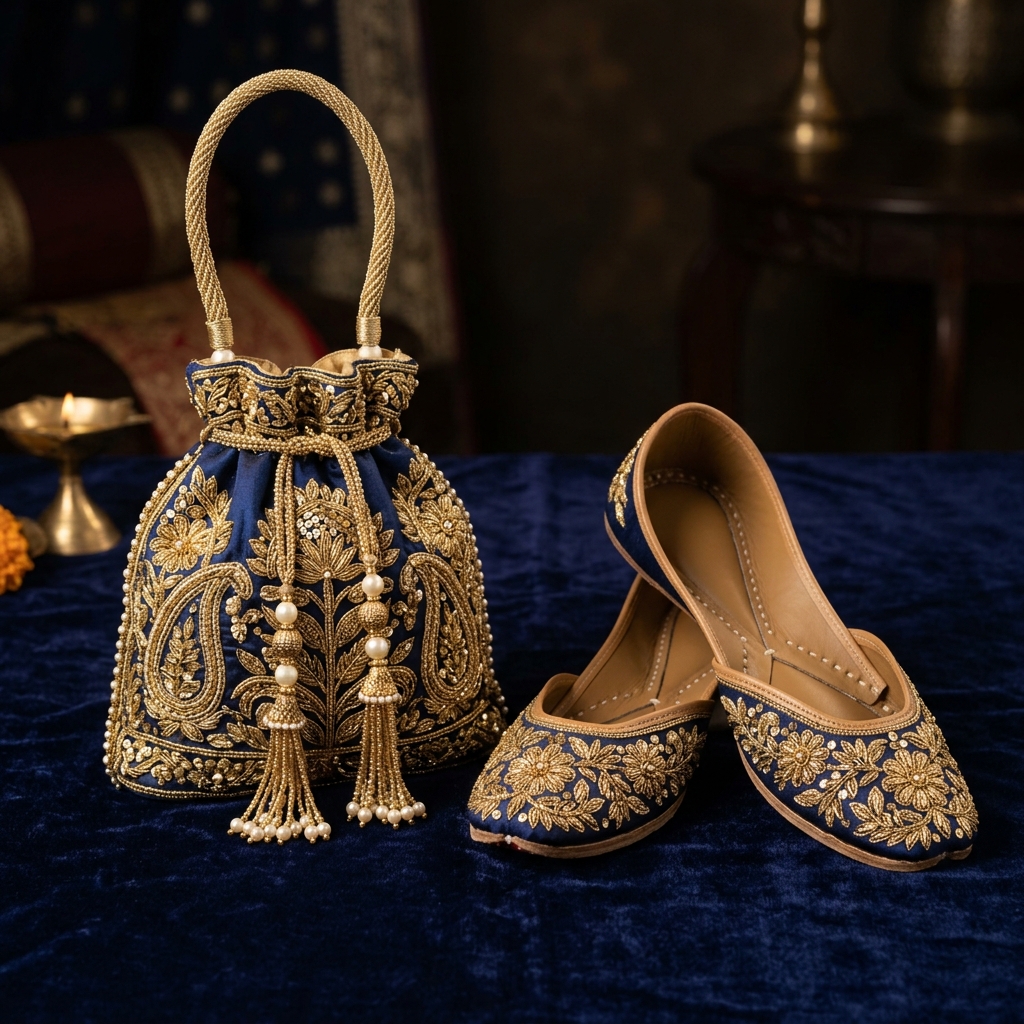
Accessories can elevate an affordable cotton suit into a high-fashion statement or disrupt the visual harmony of a luxury silk saree. When styling Indian ethnic wear, the most common mistake is over-matching—attempting to buy shoes and handbags in the exact dye-lot shade of the kurta. Instead, intentional contrast and metallic alignment create effortless sophistication.
The 4 Essential Accessory Matching Rules
1. Anchor Metal Hardware with Zari Borders
The fastest way to look coordinated is matching the hardware of your bag (clasps, chain straps, metallic embroidery) and your footwear embellishments to the zari border on your garment:
- Warm Gold Zari (Banarasi / Kanjeevaram): Pair with antique gold kolhapuris, champagne gold juttis, or metallic gold potlis.
- Silver / Resham Zari (Chikankari / Chanderi): Pair with silver embellished heels, gunmetal clutches, or pearl-studded footwear.
2. Pick Up a Secondary Accent Color from Your Dupatta
If your suit or saree features a multi-colored floral print or contrasting dupatta border, choose the least dominant accent color for your footwear or clutch. For example, if you wear a bottle green kurta with a dupatta featuring subtle mustard yellow marigold motifs, wearing mustard juttis ties the entire silhouette together without looking repetitive.
3. The Universal Metallic & Nude Fallback
When in doubt, two accessory shades match over 90% of Indian ethnic wardrobes:
- Antique Dull Gold: Unlike bright yellow gold, matte antique gold blends seamlessly with jewel tones, warm pastels, and earthy neutrals.
- Skin-Tone Nude: Nude block heels or minimalist strap sandals elongate your legs under anarkalis and lehengas by removing visual break lines at the ankles.
4. Avoid the "Mono-Match" Trap
Wearing a crimson red suit with red juttis, a red potli, and red bangles flattens your look into a single color block. Break up saturated solids by pairing your primary garment with contrasting metallic accessories or neutral leather accents.