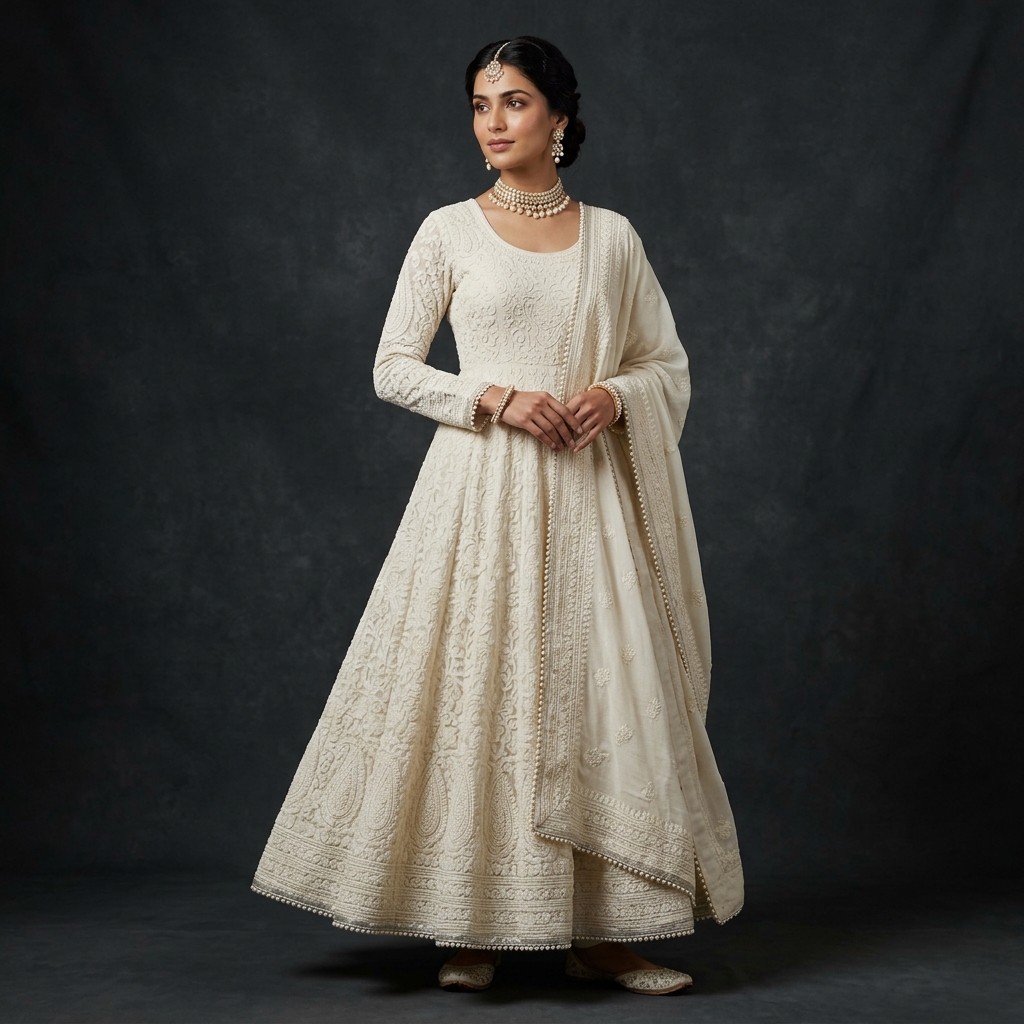
Monochrome Indian outfits—an all-white chikankari anarkali, an all-black velvet suit, or an all-pastel pink organza set—offer an unmatched sense of tall, streamlined elegance. However, wearing a single color from head to toe can easily look flat or wash out your natural complexion if you ignore optical texture principles.
The 3 Rules of Modern Monochrome Ethnic Styling
1. The Rule of Three Textures
When every garment is the exact same hue, visual interest comes from differing surface light absorption. Combine at least three tactile finishes within your single-color outfit:
- Matte Foundation: A structured raw silk, cotton, or crepe kurta.
- Luminous Sheen: A satin or georgette bottom with subtle light reflection.
- Translucent / Sheer Layer: An airy organza or chiffon dupatta that softens the single-shade silhouette.
2. Choose the Right Monochrome White for Your Undertone
Not all whites reflect light identically on South Asian skin tones:
- Cool Undertones: Optic stark white, crisp chalk, and icy pure white illuminate cool rosy undertones and make eyes pop.
- Warm & Olive Undertones: Warm ivory, rich cream, vanilla, and champagne white harmonize with golden undertones without creating a sallow cast.
3. Frame the Neckline with Metallic Accents
To prevent a monochromatic garment from overwhelming your facial features, introduce subtle metallic borders (gota patti, delicate zari, or metallic jewelry) right at the collarbone. This creates a natural visual frame that directs focus upward to your face.