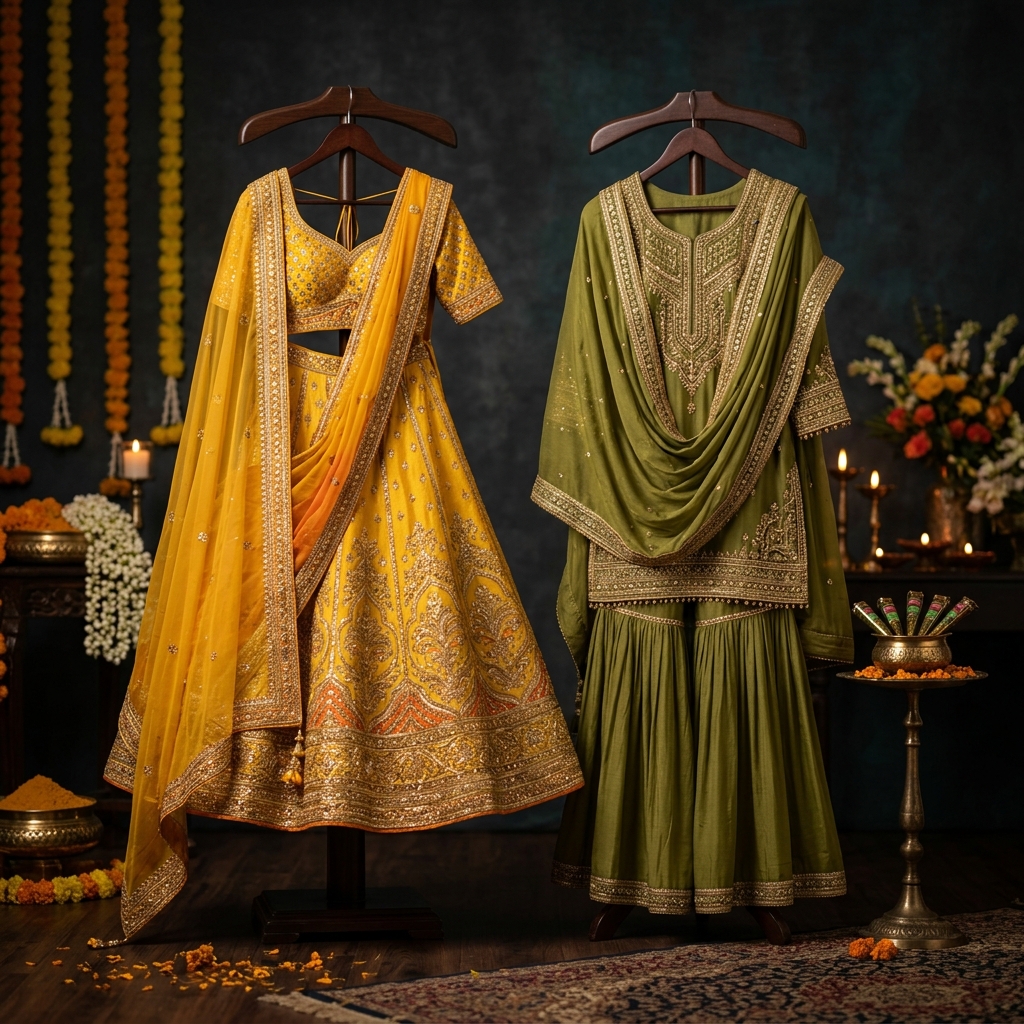
A contrasting festive dupatta is without doubt the single most versatile item in an Indian woman's wardrobe. In Indian ethnic fashion, an outfit is rarely defined by the base kurta alone—it is the dupatta that frames your neck, accentuates your facial complexion, and dictates the overall formality of your look. Adding a handcrafted Banarasi silk, Punjabi Phulkari, or Rajasthani Leheriya dupatta can elevate an affordable ₹800 plain cotton suit into a breathtaking ₹5,000 statement ensemble.
However, many women hesitate to experiment beyond matching solid dupattas because they fear color clashing or improper fabric draping. In this comprehensive 2,000+ word masterclass, we break down the color science, handloom fabric characteristics, 5 high-impact color pairing formulas, and 6 royal draping techniques that will instantly refresh your existing ethnic collection.
1. The 5 High-Impact Festive Dupatta Colour Combinations
When selecting a contrast dupatta for a plain or solid suit, the goal is to create visual balance rather than chaotic discord. Here are 5 tested color pairing formulas designed for Indian complexions:
2. Handloom Fabrics: Banarasi, Phulkari, Leheriya & Organza
The texture of your dupatta dictates how light bounces near your face. Mixing fabrics adds dimensional luxury:
| Dupatta Fabric | Texture & Weight | Best Plain Kurta Match | Formality Level |
|---|---|---|---|
| Banarasi Katan Silk | Heavy, structured, glossy gold zari brocade | Plain Raw Silk or Matte Chanderi Suit | Heavy Wedding / Reception |
| Punjabi Phulkari | Medium, vibrant pat silk thread embroidery | Plain Cotton or Linen Kurta Set | Festive / Daytime Mehndi |
| Rajasthani Leheriya / Bandhani | Lightweight, crinkled silk or chiffon tie-dye | Plain Georgette or Anarkali Suit | Haldi / Sangeet / Pooja |
| Organza with Gota Patti | Sheer, crisp, lightweight with gold border | Pastel Cotton Mulmul or Silk Kurta | Modern Daytime Elegance |
3. 5 Royal Dupatta Draping Styles
Drape 1: The One-Shoulder Royal Cascade
Pleat the dupatta neatly and pin it on your left shoulder, allowing the heavy embroidered border to fall gracefully down your front and back. Ideal for Banarasi silk dupattas paired with straight-cut kurtas.
Drape 2: The Front Waterfall (Elongating Silhouette)
Pin the ends on both shoulders while letting the center dip down your front like a cowl. This creates a vertical focal line that makes you look taller and slimmer.
Drape 3: The Diagonal Belt Pin (Modern Indo-Western)
Drape the dupatta over one shoulder and cinch it at the waist using a matching fabric or metallic leather belt. This defines your waistline and works brilliantly for festive parties.
Drape 4: The Regal Elbow Wrap
Pass the dupatta behind your back and rest it over both elbows. This highlights statement necklines and heavy choker necklaces without blocking your outfit front.
4. Frequently Asked Questions
Q: Should my shoes match my suit or my dupatta?
Matching your footwear to a minor accent color in your dupatta creates a balanced, professional stylist look without looking overly uniform.
Q: How do I prevent slippery silk dupattas from falling?
Use safety pins lined with a small piece of cardboard or fabric tape underneath shoulder seams to prevent tears while holding heavy brocade in place.
5. Match Dupattas Automatically on Colourity App
Digitize your plain suits and festive dupattas using the Colourity Android App. Scan your clothes once, and Colourity's deterministic matching engine automatically generates gorgeous dupatta combinations tailored to your skin tone and season!